
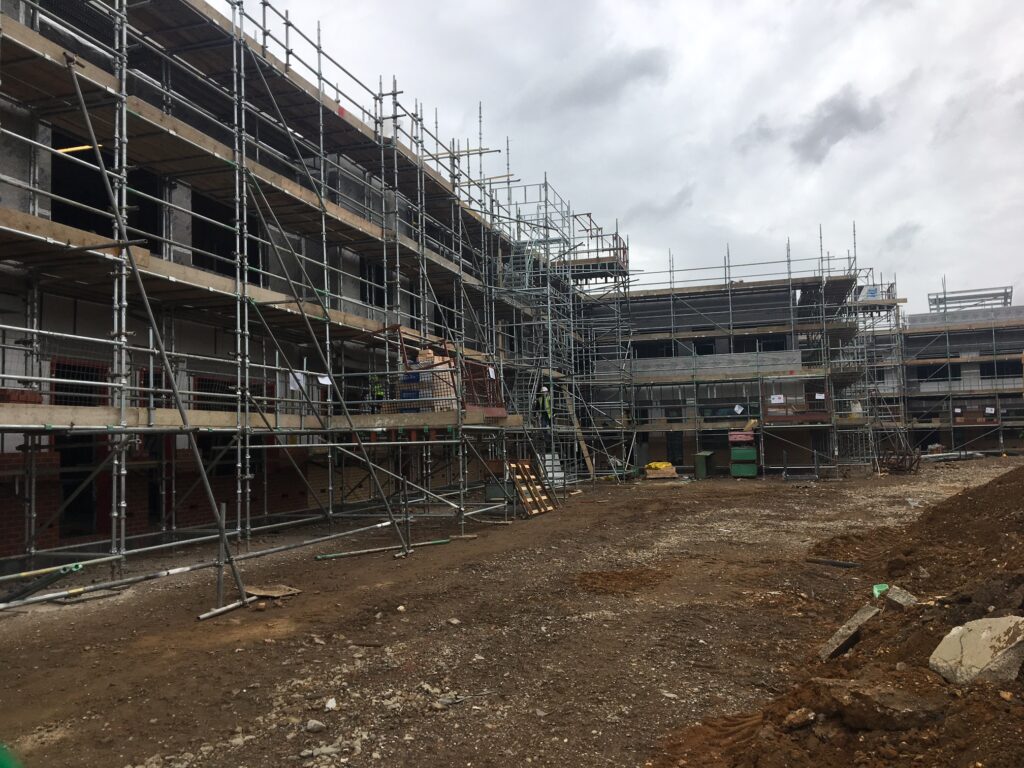
Scaffolding is widely used across a huge variety of different project types.
From small domestic projects, to vast constructions for commercial or industrial buildings, scaffolding is the cornerstone of safe and efficient construction.
These temporary access structures ensure working at height, handling materials and accessing sites can be completed safely and precisely, while still giving teams the required level of flexibility.
As scaffolding is so widely used, there are stringent standards and regulations in the UK governing its usage. These are designed to protect workers and the public alike, while ensuring best practices are adhered to throughout all industries.
In this article, G&R Scaffolding’s expert team have outlined how scaffolding is typically used, why these standards are so important, and listed the most important British scaffolding standards to comply with.

How often is scaffolding used in construction?
Scaffolding is a critical component of a significant proportion of UK construction projects.
In fact, around 65% of all construction workers (both UK and internationally) are estimated to perform some kind of work on scaffolding at least once every single year.
Scaffolding supports a wide range of tasks, including:
- Installation of brickwork and building façades
- Roofing installation and maintenance
- Property inspections and repairs
- Property refurbishments
- Demolitions
Why are scaffolding standards so important?
Scaffolding standards are absolutely critical. Not only because scaffolding is so widely used, but also because its usage typically involves significant associated risk.
As a result, these standards and regulations are needed to protect workers and the public alike.
Working at height is one of the leading causes of workplace injuries in the UK.
As a result, these regulations and standards help to minimise the risk associated with scaffolding, by ensuring:
- Consistent design and erection of scaffolding
- Establishing clear inspection standards and rules for scaffolding usage
- Consistent and dependable safety practices are used across projects
- Scaffolding systems have the necessary level of structural integrity
- Scaffolding users are sufficiently trained
- Scaffolding is carefully inspected and maintained
While the risks associated with working at height can’t be completely removed, these regulations reduce known hazards and risks as much as possible.
The main British standards in the scaffolding industry
Standards and regulations in the scaffolding sector are mostly provided by the Health and Safety Executive, plus British Standards and other leading industry bodies.
The key standards that you need to be aware of are listed below. But, note that this is by no means an exhaustive list.
BS EN 12811 – Temporary Works Equipment (Scaffolds)
BS EN 12811 is the primary design and performance standard for scaffolding.
It governs scaffolding used in the UK and Europe, and outlines:
- Structural design requirements
- Load classes
- Performance criteria
- Safety requirements (including stability)
- Dimensions for access points and working platforms
This standard works to regulate scaffolding engineering, ensuring it can withstand expected loads and perform dependably in different environmental conditions.
Work At Height Regulations 2005
The Work at Height Regulations are a core legal framework. These regulations apply to any work in the UK that is conducted above ground level, and where falls could result in injury.
With regards to scaffolding, these regulations specify:
- Risk assessments and planning requirements
- How appropriate access equipment should be selected
- Minimum requirements for worker competence and training
- Inspection requirements (including how often inspections are needed)
NASC Resources (TG20 And SG4)
The National Access and Scaffolding Confederation (NASC) is responsible for publishing and updating industry advice.
Its main guidance for scaffolding use includes:
- TG20 – Outlining compliant scaffold configurations
- SG4 – Advising safe working practices, to minimise the risk of falls
Although these guidelines are not UK legislation, these resources are highly regarded, and upheld as industry best practices.
BSI Frameworks
The British Standards Institution (BSI) develops formal standards for scaffolding in the UK.
These standards span everything from access equipment and materials, to structural performance. These benchmarks have to be followed by scaffolding manufacturers, designers and contractors, to ensure safe and compliant usage.
Remaining compliant with UK scaffolding regulations
By having a thorough knowledge of these standards, you can:
- Better protect your workforce and the public
- Reduce accidents
- Minimise the risk of legal liability for an accident
- Fulfil your insurance and contractual requirements
- Keep your project running smoothly and efficiently
At G&R Scaffolding, we are one of the UK’s leading providers of commercial and industrial scaffolding services. Our highly qualified and fully accredited team are on hand to ensure your project, and ensure the highest safety standards are followed throughout.
To find out more about our services, don’t hesitate to get in touch.

